Story
At the end of 2024 the Catholic Bishops' Conference of Japan counted 412,958 Catholics, 0.331 percent of a population of about 124.9 million, in 15 dioceses.Four years earlier, at the end of 2020, the figure was 435,083.
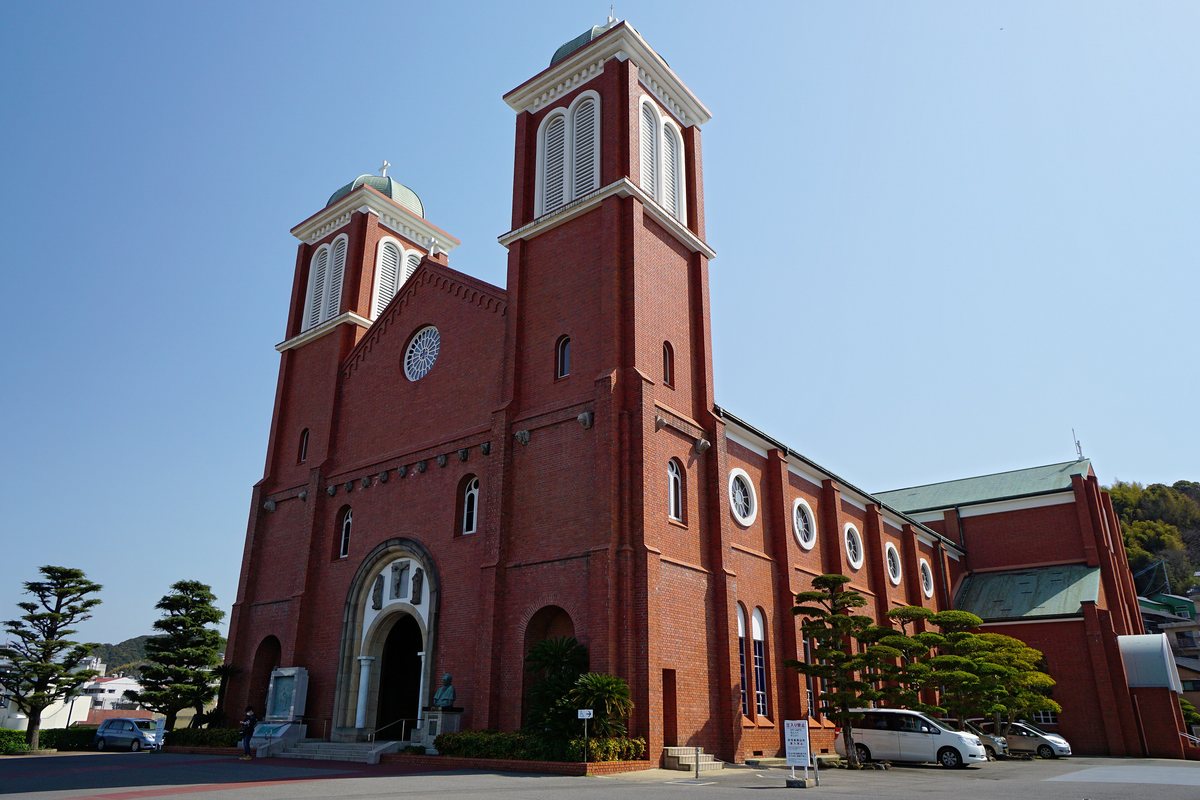
The heart of the map is still where the kept the faith. In the Archdiocese of , 56,066 Catholics make up 4.346 percent of the population: more than ten times the national rate, and second in absolute numbers only to the far larger Archdiocese of Tokyo (93,765).
The Church gathers in 944 churches, 770 of them parishes, served by 1,286 priests, 27 of them bishops; 507 of the priests hold foreign nationality.On an ordinary Sunday in 2024 about 78,000 people came to Mass; at Easter about 131,000, and at Christmas about 159,000.In the same year 3,922 people were baptized, 2,052 of them adults.The Church also runs 316 schools, from primary schools to universities.
The bishops speak frankly about the strains. Their 2024 report to the Synod in Rome notes that Japan's low birth rate and ageing society touch the Church too, and that "the ageing of the faithful is conspicuous".They also describe a Church already "multinational and multicultural," in which many residents from abroad, "especially workers from Asia and South America," have become "important members" of its communities.The same report adds that through its schools and charitable work the Church "is widely recognised in Japanese society," and that its walking alongside people after earthquakes and other disasters has been accepted even by non-Christians.
A continuing challenge was the perception that Christianity was foreign; churches sometimes used inexpensive English classes to introduce Christian teaching and welcome visitors.Christian schools also faced falling enrolment, especially women's junior colleges, by 2000.
Challenges and cooperation
Family responsibilities toward ancestral altars could complicate conversion: in one study, eight husbands without such duties converted, while thirteen with those duties did not.Some Japanese Christians concealed their convictions to preserve group harmony, and conversion could strain family relationships.In 1987 Catholic and Protestant cooperation produced the New Interconfessional Translation of the Bible, adopted for Catholic liturgical use.Catholics and Protestants also opposed public funding for imperial rites in 1989 and 1990, and Christians joined protests over the 2019 enthronement ceremonies.
Catechesis and worship
The official Catholic catechism of 1896 shaped Japanese Catholic vocabulary for decades, and a 1925 revision adopted a more colloquial style.Since 1960 Catholics have commonly used Kamisama in place of Tenshu for God.In 1955 the bishops established a commission to revise the catechism and prayer book and required locally approved catechisms for religious instruction.The bishops' tighter definition of catechumens lowered the recorded total from 24,863 in 1954 to 17,019 in 1955.A Catholic charismatic renewal movement emerged in 1972 but made limited later gains.
A longer view
The number of Christians of all denominations remained below one percent of Japan's population around 1998 to 2003.At the end of 1998 Protestant churches counted about 460,000 members and 5,700 churches or meeting places.A 2002 estimate placed the total Christian population at about 900,000, or 0.7 percent.About 1979 the Archdiocese of Nagasaki still had over 70,000 Christians and more than eighty Japanese priests.
What is uncertain
Where the sources disagree
- The Synod report (dated May 4, 2024) gives "about 437,000" and 773 parishes, from older statistics; the 2024 yearbook figures are preferred.
- Historical denominational and all-Christian population estimates use different measures and periods; the roughly 900,000 total in 2002 must not be confused with Catholic membership in 2024.
