A man with a sword asks for water
On an autumn day in 1708 a farmer named Tōbei was cutting wood for charcoal at a place called Matsushita, on the island of Yakushima, south of Kyushu. Behind him he heard a man's voice. He turned. A stranger stood there with a sword at his belt, waving him closer and saying words Tōbei could not understand.
The stranger mimed that he was thirsty. Tōbei poured water into a bowl and set it on the ground, keeping his distance. The man drank, and beckoned again. Tōbei would not step forward while that sword hung at the man's side. The stranger seemed to understand. He took off the sword, scabbard and all, came close, and held out a rectangular gold coin. Tōbei refused both the sword and the money, went down to the shore, and looked out to sea. The ship he had seen the day before was gone.
That is how the scholar Arai Hakuseki, writing a few years later from the official reports, tells the first meeting between Japan and Giovanni Battista Sidotti.The stranger was a Sicilian priest, alone, in a country where his religion had been banned for almost a century. He had no way home. The question that carries his story is simple: what happens when a lone priest walks into a closed country and finds himself face to face with its finest mind?
A lawyer-priest from Palermo
Sidotti was born in Palermo on 22 August 1667, according to the Italian national biography, which calls the date documented.: Japanese Wikipedia, following the Japanese edition of Torcivia's biography, gives 1668.He was ordained in Palermo, took degrees in philosophy, theology and law, and by 1693 was in Rome, working for Cardinal Tommaso Maria Ferrari.He was a secular priest, not a member of any order.
At the end of 1701 he was named to the papal legation of Charles-Thomas Maillard de Tournon to China. He sailed from Civitavecchia on 4 July 1702 and reached on 22 September 1704.There he stayed four years. He studied Japanese with Japanese living in the city, ran a seminary, and helped found a charity for abandoned children. People called him "Battista Stella."In 1707 the governor paid for a ship, the Santísima Trinidad, to carry him north.
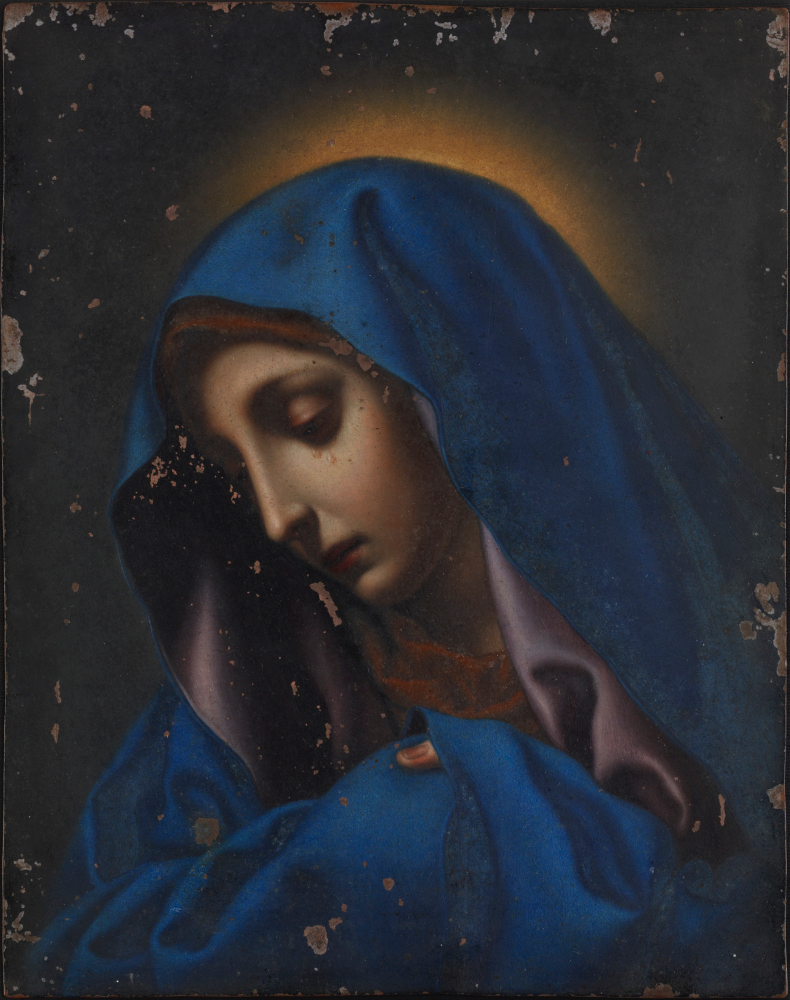
He brought with him what he thought he would need: his Mass kit, a breviary, two Japanese grammars, a copper painting of the Madonna after Carlo Dolci, and a small crucifix once worn by the martyr Marcello Mastrilli.He also brought gold. That gold would later make Hakuseki suspicious.
The landing
After about fifty days at sea he was put ashore at night on Yakushima, near the village of Koshima. The Italian biography gives the date as 9 October 1708.Carolina Capasso, working from Seiyō kibun, says the ship left Manila on 23 August 1708 and puts the landing on the night of 10 to 11 October, the 29th day of the 8th month of Hōei 5.He was dressed as a Japanese, with a sword and a shaved crown with a topknot.Hakuseki's account says the islanders had watched a many-sailed ship towing a boat along the coast, lost it in the dark, and saw it again at dawn off Yudomari before a north wind carried it south.
He was taken at once. On 20 December 1708 he was imprisoned at .Despite what some biographers say, the Italian biography stresses, he could not speak Japanese well, and he was questioned through interpreters and men of the Dutch East India Company.The Dutch had no idea what to make of him. Neither did the Nagasaki officials. So they sent him to Edo, to the one man in the shogun's service who might.
Across a bench in Koishikawa
He was held in the , the "Christian mansion," a prison compound at Koishikawa in Edo. In December 1709 and January 1710 the Confucian scholar and shogunal adviser Arai Hakuseki questioned him in four sessions.
Hakuseki left a portrait. The European was very tall, well over six shaku; an ordinary man did not reach his shoulders. His black hair was untidy and his nose prominent. He wore a dark padded silk robe the lord of Satsuma had given him. Whenever he sat down, he traced a sign on his forehead with his right hand. When the weather turned cold, the officials offered him warmer clothes, and he refused them. His faith, he said, did not allow him to accept gifts from those outside it. Food he accepted, because he needed it to stay alive and finish his mission. "My debt of gratitude to this country is already heavy," he said.
Then came the moment that won Hakuseki over. A Dutch-printed world map was spread on the floor. Hakuseki asked where Rome was. The names were too small for the interpreters to read. Sidotti asked for a circinus, a pair of compasses. Hakuseki pulled one from his own robe. "The pivot is loose," the prisoner said, "but it is better than nothing." He copied a scale diagram with a brush, worked out the degrees, then reached out from his bench, walked the compasses across the web of lines, and stopped. "Is it not here? Please check." The point stood inside a circle as small as the eye of a needle. Beside it, the interpreters said, was written "Roma."
Three choices
Hakuseki wrote the interviews up as Seiyō kibun, "Things Heard about the West," one of the founding texts of Japanese knowledge of Europe.Capasso shows that he began writing only after Sidotti's death: the first part is dated 16 to 25 March 1715, and the finished text seems to date from 1724 or 1725, the last years of Hakuseki's life. In a letter to a friend he called the meeting "isshō no kikai," the one chance of a lifetime.He also wrote a formal opinion for the shogun. There were three ways to deal with the prisoner, he said. The best was to send him home: it looked hard but was easy. The middle way was to spare his life and keep him prisoner: it looked easy but was hard. The worst was to put him to death: it was simple to carry out.The shogunate chose the middle way, confinement with an allowance.He was never tortured or sentenced to death.
Hakuseki also asked the Dutch about him. One told him a theory: perhaps the man had committed a capital crime at home, and his own people had let him go to Japan so that either he would win or Japan would carry out the sentence for them. Hakuseki did not believe it.The prisoner settled into the routine of the Christian mansion. It might have ended quietly there. It did not, because of two old servants.
Chōsuke and Haru
In the winter of 1714, a married couple who looked after the prisoner, Chōsuke and Haru, came forward on their own. Hakuseki records their words. Long ago, they said, their old master had taught them his faith in secret, though they had not understood it was against the law. Then they saw this European, who had come so far without thought for himself and been locked up. In the few years left to them, they did not want to fall into hell for ever. So they had asked him for baptism. Keeping it secret would betray the country's kindness, they said, so they were confessing it.
The couple were separated. Sidotti, who had gone against his earlier declarations, was bound and lowered into an underground cell. And now, Hakuseki writes, his true heart showed. Day and night he called out the couple's names in a loud voice, urging them to hold firm until death.
The end, and a grave found
In the tenth month of that year, Chōsuke fell ill and died. Hakuseki was told he was 55. In the middle of the same month the European also fell ill, and on the 21st, deep in the night, he died. "He must have been forty-seven," Hakuseki wrote.By the Western calendar that was 27 November 1714.
For three centuries no one knew exactly where he lay. In 2014 excavators at the yashiki site found three Edo-period burials. One was a European man laid out full length in a coffin near the rear gate, as old records say. Mitochondrial DNA matched a Tuscan Italian group. Since the only other Italian known to have died there, , had been cremated, the team judged the skeleton to be Sidotti.
In November 2016 the National Museum of Nature and Science unveiled a reconstruction of his face.In 2019 Palermo opened a cause for his beatification, delegated to the Archdiocese of Tokyo.Tōbei's bowl of water, set on the ground at arm's length, is where it all began.
