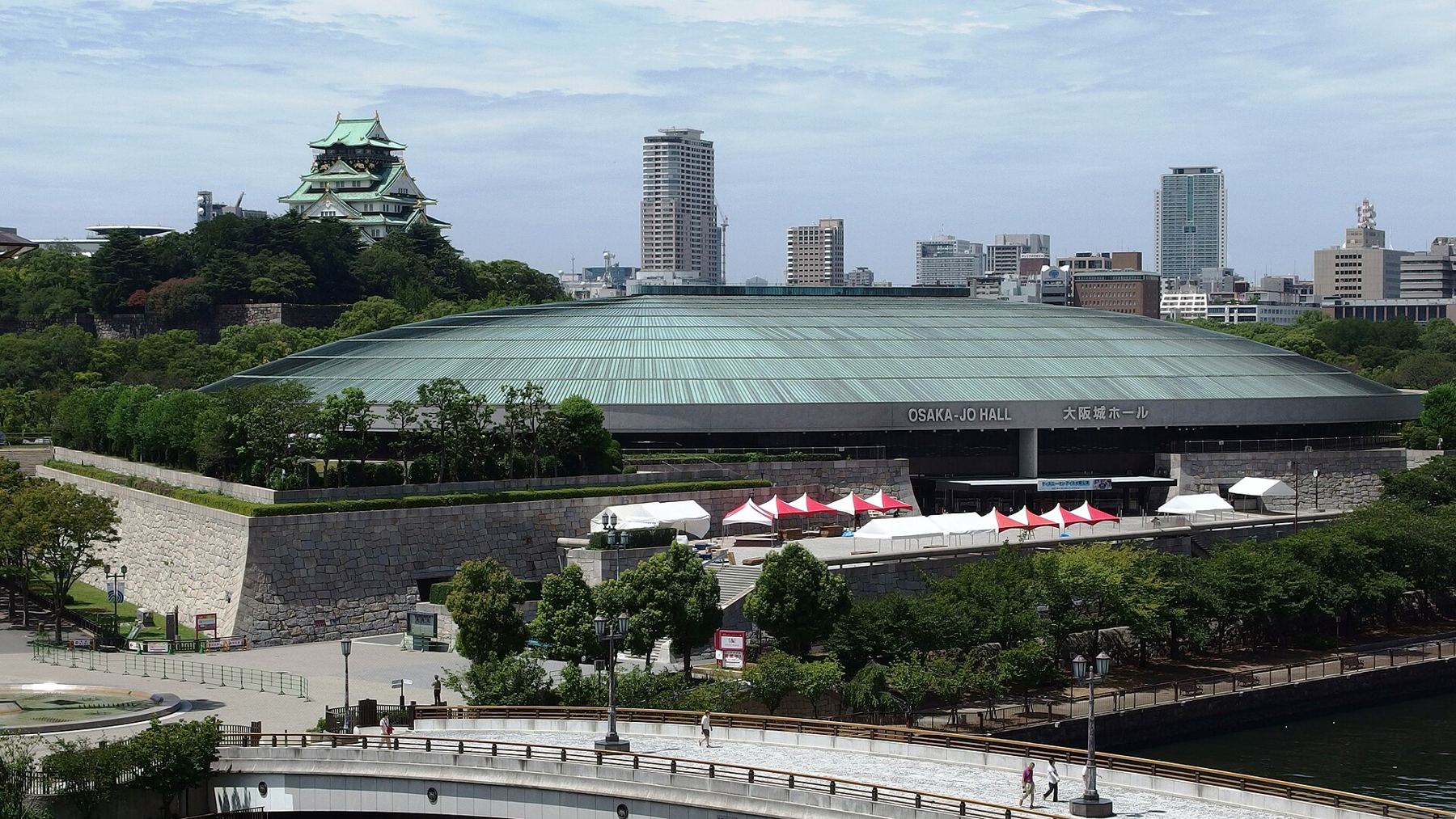
A hall below the castle
The beatification Mass was celebrated in Osaka-jō Hall by Cardinal , prefect of the Congregation for the Causes of Saints, as the Pope's representative. About ten thousand faithful came from Japan and abroad. With them Cardinal Luis Antonio , Archbishop of Manila, the city where Ukon died, about thirty bishops and some three hundred priests concelebrated, and many people connected with Ukon were invited. In a solemn rite Ukon's beatification was proclaimed, and a new portrait of him, painted by Mimaki Kazuko, was unveiled during the Mass.
The Church honoured him as a father of a family and a lay faithful of Japan who died a martyr in Manila in 1615, repeating the name of Jesus; rather than compromise, he gave up honours and comfort and accepted humiliation and exile.
Sources: a hall below the castle
The Bishops' Conference published the homily, the numbers present and the order of the day; the Dicastery for the Causes of Saints keeps the record of the beatification.
The cathedral at Tamatsukuri
The next day a Mass of thanksgiving was held in the cathedral of the archdiocese, St Mary's at Tamatsukuri, and in the days after in Kanazawa, Tokyo and other dioceses. The parish was founded in 1894 with a church of St Agnes on this site; it burned in the war, was rebuilt as the church of St Francis Xavier, and in 1963 became the Cathedral of St Mary. Before its main door stand statues of Justo Takayama Ukon and by Abe Masayoshi.
Diogo Yūki, the last missionary of Osaka
Ryōsetsu was born in Awa in 1574. As a boy he entered the seminary that moved from Azuchi to Takatsuki, Ukon's town, and in 1595 he joined the Society of Jesus on Amakusa. From 1601 he studied for three years in Macao with Julião Nakaura. In 1614 he was exiled to Manila with Takayama Ukon, and there in 1615 he was ordained priest. The Jesuit provincial wrote of him: "Father Diogo Yūki, Japanese, honest and hardworking, effective and of great influence among the Japanese."
In 1616 he slipped back into Nagasaki and was sent to Kyoto. From Kyoto and Osaka he went out almost every year to the Kinai, Shikoku and as far as Edo, and he once visited Christians exiled to Tsugaru. In 1619 he stood by the martyrs of Kyoto and buried them. One by one the missionaries fell into the persecutors' hands, until Yūki was the only priest left in the Kinai. Like Jesus, the Bishops' Conference writes, he walked the long road of the cross alone, and his zeal never failed.
At last he was taken in the mountains near Osaka, and in February 1636 he ended his road in Osaka in the . His faithful companion, the , was at his side. The officer sent from Nagasaki reported that the old man spoke with confidence: he had lived hidden in the mountains with no place to stay and ate what nature gave him. He was 62.
