A bell under the rubble
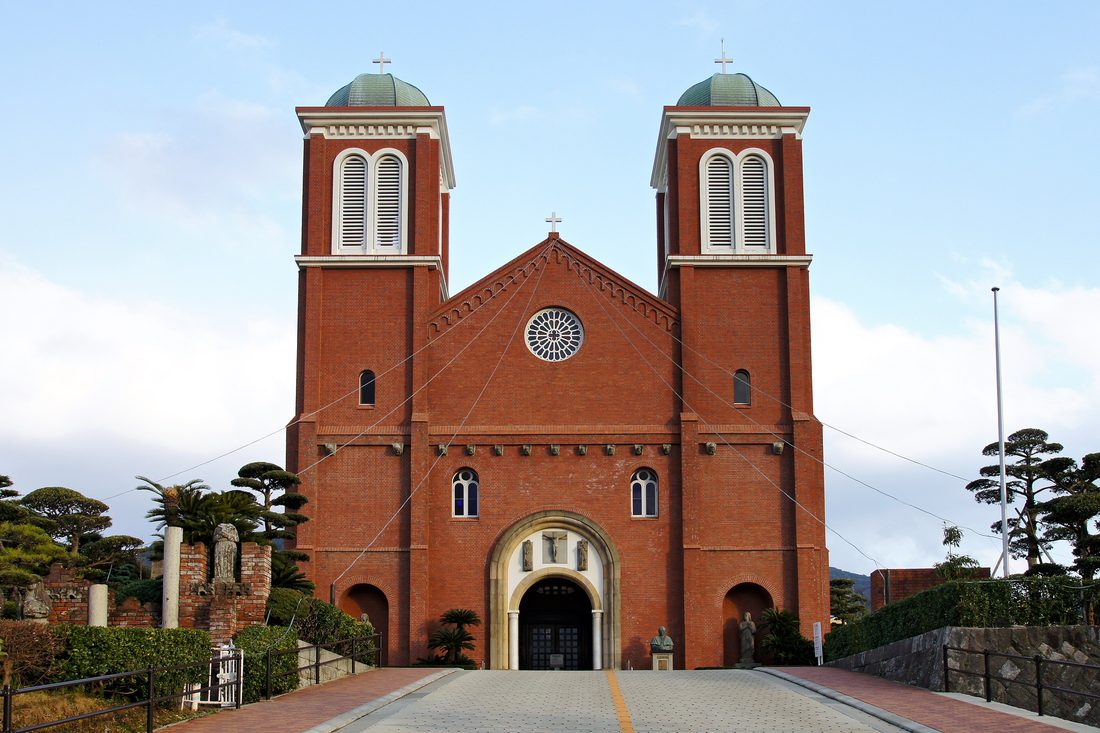
When the old cathedral fell on 9 August 1945, its two French bells fell with it. The small bell was shattered; fragments are kept in the parish hall. The large bell came out of the ruins undamaged. 1 Today it hangs in the right-hand tower of the new cathedral and rings over the Urakami hill every day. 1 That bell is the thread between slide 8 and slide 11.
It rang again sooner than anyone might expect. The parish history says Nagai Takashi wanted the bell to lift the spirits of the survivors and give them the will to rebuild. With the parish's agreement, three logs were lashed into a tripod and the bell was hauled up with a chain block. On Christmas night, 24 December 1945, it rang over the burned plain of Urakami for the first time since the bomb. 13 A steel temporary belfry followed in December 1946; the parish history says it became the model for Nagai's book The Bells of Nagasaki. 13
Why concrete
After the ruins were taken down in March 1958, the parish asked the Tetsukawa construction firm, famous for its churches, to design and build a new one on the same site. The Kantō earthquake of 1923 had shown that brick buildings were weak, so the new church was made of reinforced concrete. 2 It was completed in 1959; historian Fukuma Yoshiaki dates its completion to October 1959. 2,3
What survived, and where it went
At the two sides of the main entrance stand statues from the old church that escaped destruction: the Sorrowful Mother and Saint John the Apostle. 2 In the central altar are relics of three of the 26 Martyrs: Paul Miki, John Gotō and Diego Kisai. 2 On the south side, the Hibaku Maria chapel, opened in 2005, keeps the burned head of the old high-altar Virgin. 5
In 1959 Nagasaki was raised to an archdiocese, and in 1962 the bishop's seat moved from Ōura to Urakami. 6 The church built by returned exiles became the cathedral of the archdiocese.
A stone at the door
In front of the entrance stands an older witness. The 信仰之礎碑 ("Foundation of Faith" monument) was raised by the believers who had kept their faith through the exile and returned home. 4 The parish history dates it to August 1920, the 50th anniversary of the exile, when Bishop Combaz said a memorial Mass attended by many survivors of the "journey" and the monument was unveiled. 1 It survived the bomb and stands today in front of the rebuilt church. 4
The rebuilding itself began with the believers' own hands. Carpenters among them formed a group after the bombing and worked day and night, and a temporary church stood on the site by 1946. 12 The parish history adds that believers climbed the hills to fell and carry timber, since only the far slopes still had standing trees; the temporary church was blessed on 1 December 1946 by Cardinal Gilroy, and it was the first public building rebuilt in the bombed area. 13 For thirteen years Mass was said in that wooden building beside the ruins, while the parish raised money in Japan and the United States for a permanent church. 3
A grey church turns red
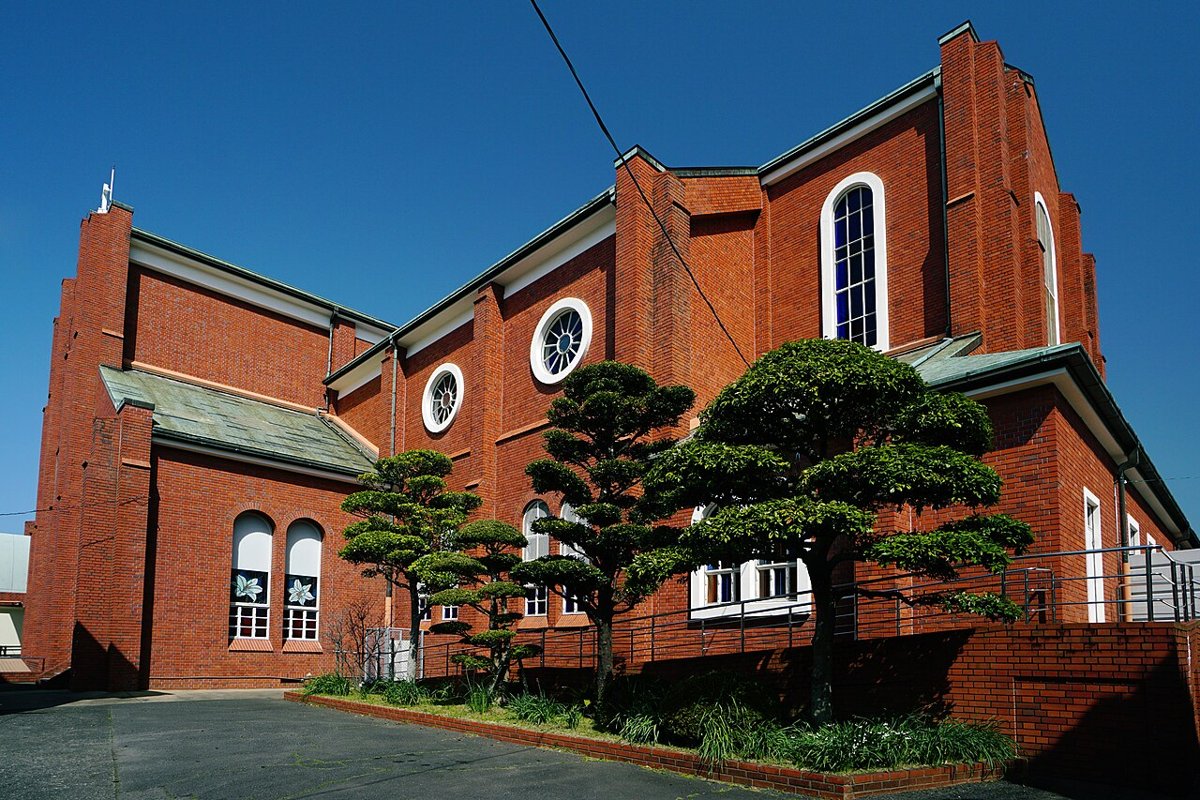
The 1959 church did not look like the old one. Money was short, and its exterior was bare grey concrete. 2 The change came in 1980, as Urakami prepared for the visit of Pope John Paul II. The outer walls were faced with brick tiles laid in English bond, every window was changed to stained glass, and a five-color rose window was set in the front. 2 The Nagasaki Prefecture column puts it simply: thirty-six years after the bomb, the church had at last recovered something of its old face, and the believers welcomed the Pope with joy. 2 John Paul II visited Nagasaki in 1981. 7
The windows show 24 scenes from the life of Christ. 8 See the Light Through Many Hands page for how this glass fits into the wider story.
What you see in the photograph
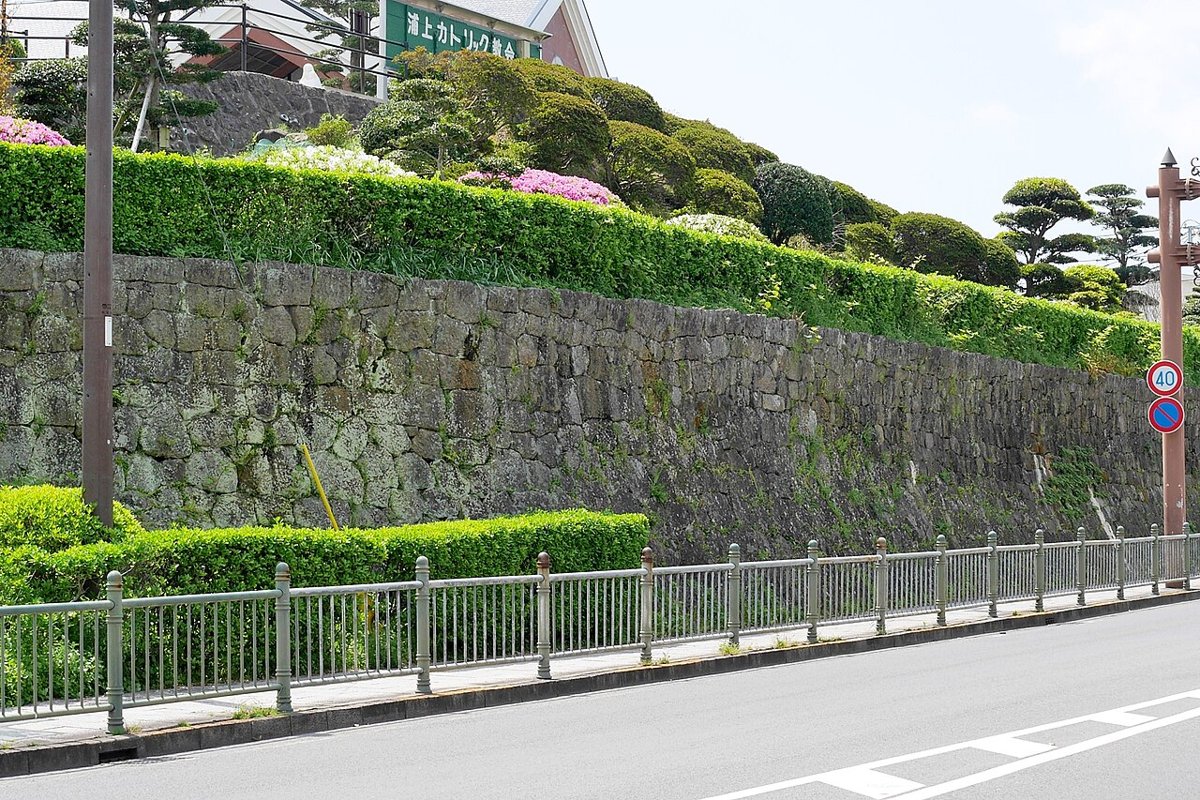
Slide 11 is a 2012 photograph by 663highland (CC BY 2.5) of the red brick front and twin towers. 9 Notefor readers: the brick you see is a 1980 facing over the 1959 concrete, not the brick of the prewar church. The bricks of that church survive only in the wall remnant in the hypocenter park and the old stone retaining wall below the cathedral. 2,10,11
Why this image ends the gallery
The gallery begins with a question asked in 1865 by people from Urakami, and ends at the church their descendants built twice. Under the brick tiles and the colored light are the stories of the other ten slides: the trampled images, the hidden Mary, the exile, the bomb, the burned head, and the bell that still rings. 1,2,5