New Year in Nagasaki
In Edo-period Nagasaki the New Year did not feel finished until one ritual was done. On the 3rd day of the first month the town elders stepped on a sacred image. From the 4th to the 7th it was the turn of the townspeople. On the 8th came the courtesans of Maruyama, in their finest clothes, called up one by one by an official reading their professional names, crowds gathering to watch. Then came a feast to drive away bad luck. 1
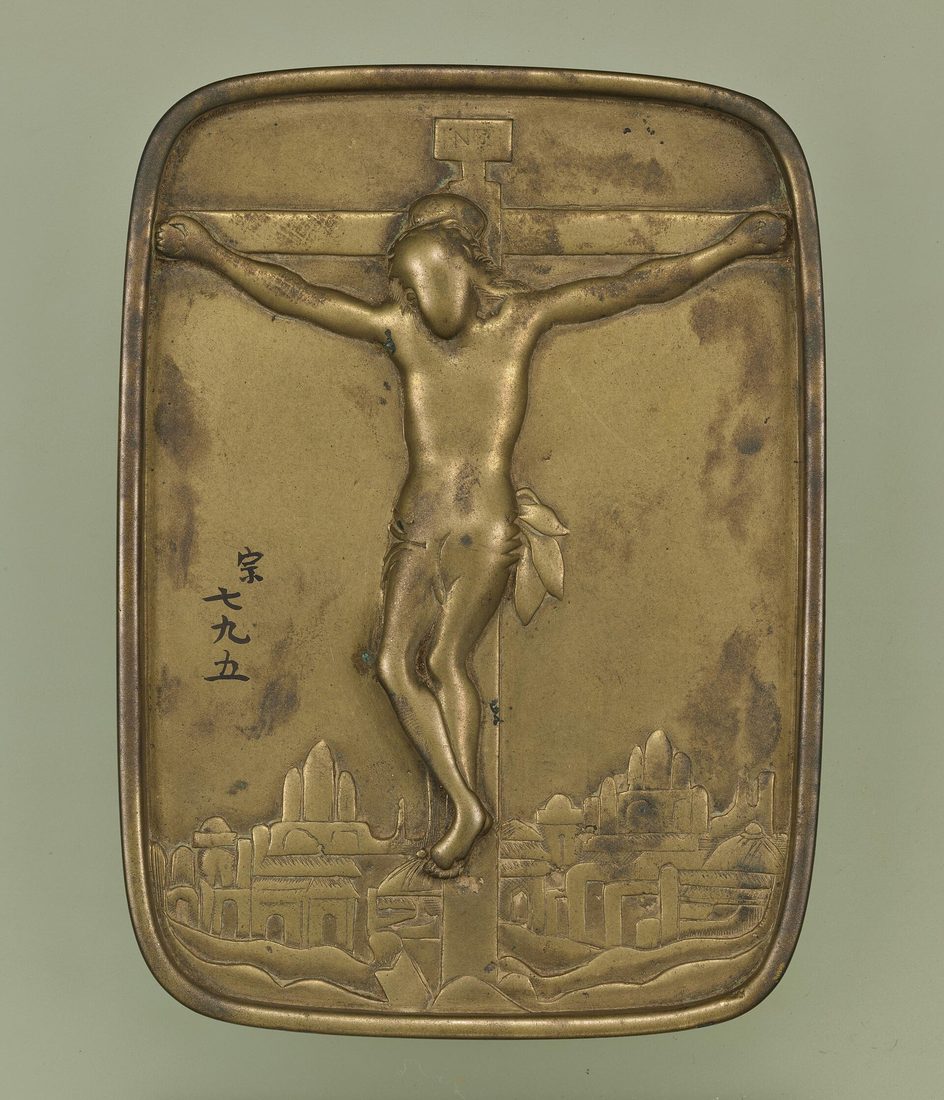
The ritual was called e-fumi (絵踏), "picture treading". The object trodden on was the fumi-e (踏絵), the "trodden picture". The brass plaque in slide 5 is one of them. 1,2
Who made the system, and why
The aim was simple and brutal: to find hidden Christians. A believer who refused to step on Christ or Mary gave themselves away; one who stepped had, in the eyes of the authorities, renounced the faith. 1 The Nagasaki Prefecture column says the system is said to have been started in 1628 by the Nagasaki magistrate Mizuno Kawachi-no-kami. 1 Disputedother reference works give 1629; the start date should be cited as "1628 or 1629".
The same collection also holds ten fumi-e set in wooden boards. 5 In 1669 the magistrate Kōno Gonemon Michisada had the caster Hagiwara Yūsa make twenty brass fumi-e. 3 The Tokyo National Museum credits one of its plaques, a Madonna of the Rosary dated 1669, to the same maker, romanized there as Hagiwara Yūsuke. 4
The plaque in the picture
The object in slide 5 is Tokyo National Museum C-1011, "踏絵 キリスト像(十字架上のキリスト)", a fumi-e of Christ on the cross. ColBase describes it as brass, 18.8 by 13.8 cm and 2.3 cm deep, Edo period, 17th century, an Important Cultural Property. 2 Unverifiedwhether C-1011 is one of the twenty brass plaques cast in 1669; the museum record does not say so.
It belongs to the group designated in 1977 as "長崎奉行所キリシタン関係資料" (Christian materials of the Nagasaki Magistrate's Office): 140 items, including ten fumi-e set in wood and nineteen brass fumi-e, as well as religious objects confiscated from believers. 5 The designation list shows what sat beside them. From the magistrate's religion storehouse came twelve holy pictures, five figures of Christ and others, seven medals and eight copper and iron plaques. Attached to the group are eleven more figures of Christ, 156 rosaries, and crosses and medals, listed as received from Urakami in 1867. 5 The trodden images and the treasured ones ended up in the same collection.
How it reached Tokyo
Until Meiji these objects were kept under lock in the magistrate's 宗門蔵 (religion storehouse), on the site where the Nagasaki Museum of History and Culture now stands. 6 In 1874 they were sent to Tokyo and passed between government offices before settling with the imperial museum. They were first shown to the public in 1906, moved to the Tokyo National Museum after the Second World War, and designated an Important Cultural Property in 1977. 6,3
How Europe saw it
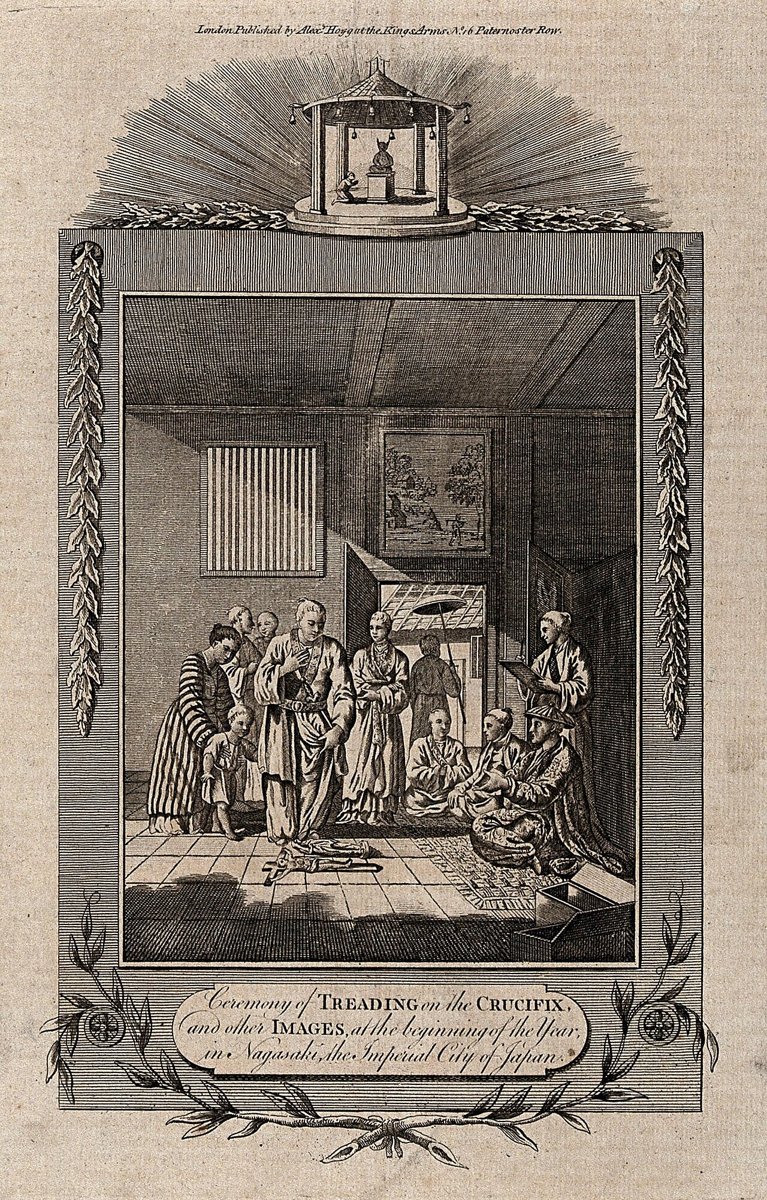
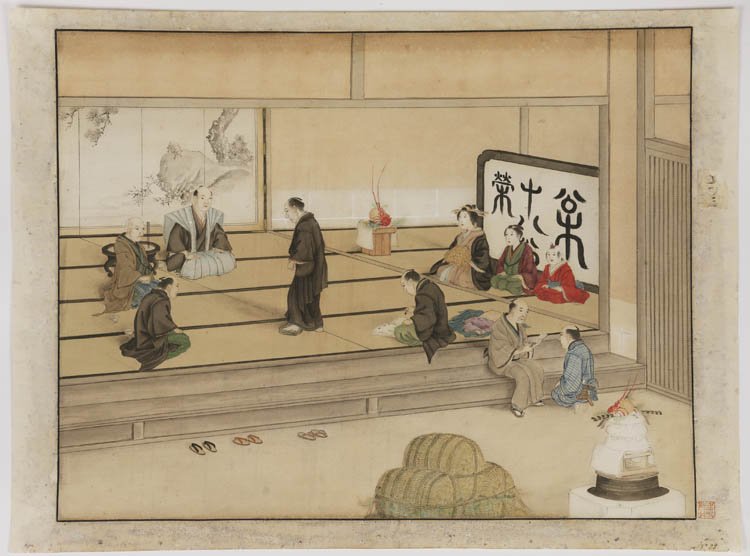
Fumi-e fascinated European readers. An engraving titled "Ceremony of Treading on the Crucifix, and other Images, at the beginning of the year, in Nagasaki" was published in London in 1789 in John Hamilton Moore's collection of voyages and travels. 9 It is an imagined scene by an artist who had never been to Japan, but it shows that the New Year timing of e-fumi was known in Europe. A Japanese picture of an e-fumi, dated 1800-1829 in its Commons record, shows the ritual from the inside: an official seated on the matting, a man standing at the center of the room, women and children waiting, and New Year decorations around them. 10 Noteboth images are illustrations, not documents of a specific event.
The museum still shows the plaques. In its 2023 exhibition on the Virgin Mary and the hidden Christians, the Tokyo National Museum displayed a brass fumi-e of the Madonna of the Rosary dated 1669 and a 17th-century Pietà, both formerly owned by the Nagasaki Magistrate's Office. 4
When it ended
The Japan Tourism Agency's timeline records that the Nagasaki magistrate ordered an end to fumi-e in 1858, the year the Ansei treaties opened Japan's ports. 3 Notethe same source labels the year "Ansei 4", which normally corresponds to 1857; the date should be checked against a primary record.
The brass is worn smooth by generations of feet. The cathedral of slide 8 was built on the site of the Urakami village headman's house, where, as the parish history puts it, the cross had been trampled for 250 years; the believers built there as an act of reparation. 7,8 The Christ underfoot and the cathedral above stand on the same ground.