A question in a new church
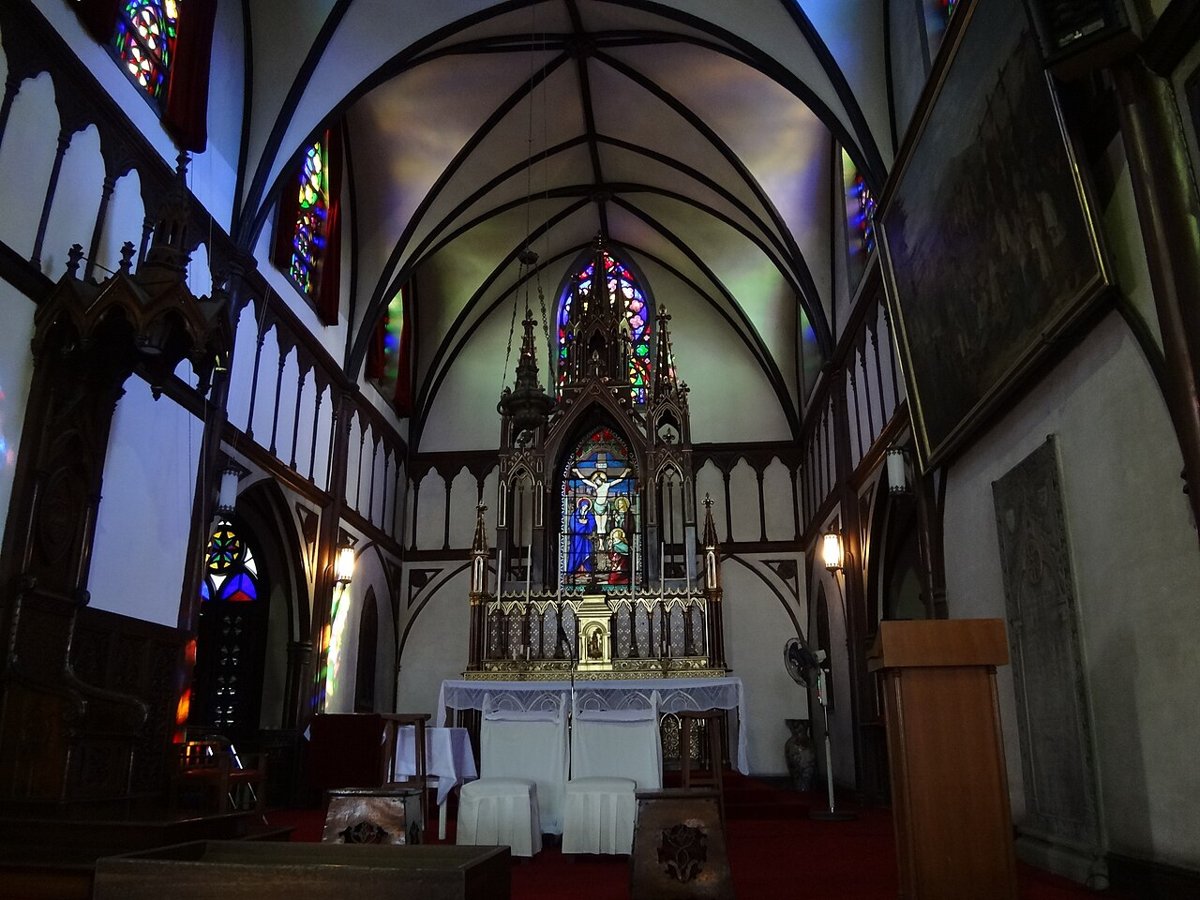
Picture a spring afternoon in 1865 on the hill above Nagasaki harbor. A brand new church, Gothic in outline and Japanese in its carpentry, has been open for about a month. Curious townspeople drift in to look. Among them is a group of farmers from Urakami, a village a few kilometers north. One woman steps up to the French priest kneeling in prayer and says, in effect: all of us here share your heart. Then she asks the question this whole site is built around: where is the statue of Santa Maria? 1,2,3
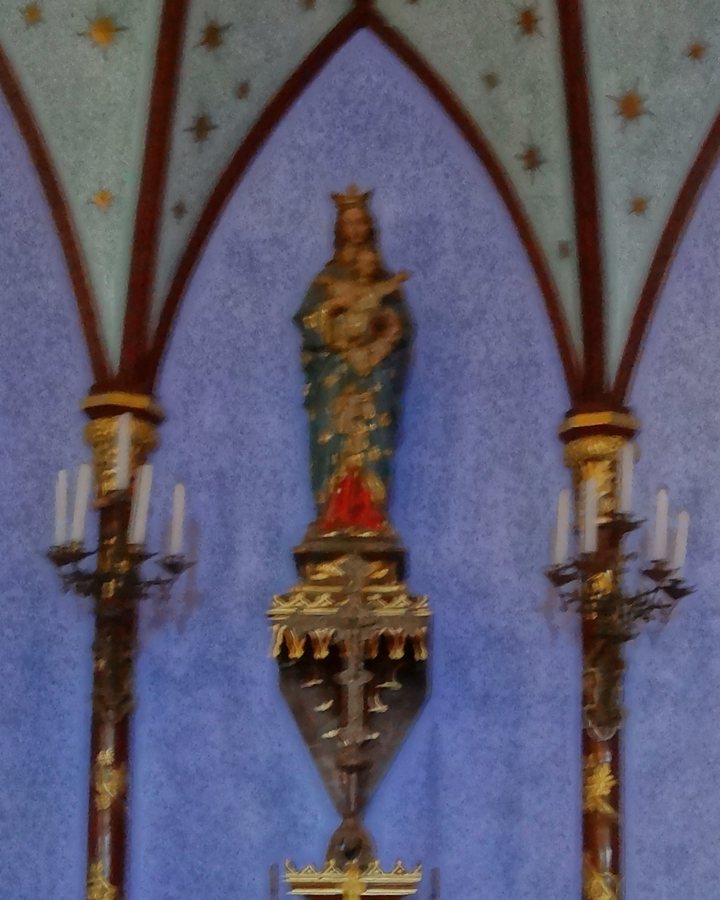
The priest was Bernard Petitjean of the Paris Foreign Missions Society. Townspeople called the new building the "French temple", but Petitjean had put up the Japanese characters 天主堂 ("church") on its front, with Japanese believers in mind. 2 Overjoyed by the question, he led the visitors to a statue of the Virgin holding the Child, and they prayed together. 2 That statue still stands in Ōura Cathedral, and it is the figure in slide 1 of our gallery. 1,2
Who asked, and why it mattered
The date was 17 March 1865 (Genji 2, 2nd month, 20th day). The Nagasaki City feature series names the woman as Sugimoto Yuri and puts the group at about fifteen Urakami people. 2 Their words are usually given in Japanese as "ここにおります私たちは、皆あなたさまと同じ心でございます" ("All of us here have the same heart as you"), followed by "サンタ・マリアの御像はどこ?" ("Where is the image of Santa Maria?"). 2,3
Why would a statue be the test? For more than two centuries Christianity had been banned. Communities in Urakami and elsewhere kept their faith in secret, without priests, passing on prayers and devotion to Mary. 4 A question about Santa Maria was a careful way to find out whether these foreigners taught the same faith as their ancestors. Church Trust's history of Ōura sums up the result plainly: the meeting proved that Christian faith had survived the ban. 1
Where the statue came from
According to the Church Trust viewing guide, the statue of Mary and the Child was brought from France by Father Prudence Girard, head of the mission in Japan, when the church was founded. 5 Girard had signed the building contract in early 1864 and presided at the dedication on 19 February 1865. 1 DisputedNagasaki City's feature says instead that Petitjean had brought the statue from France. 2
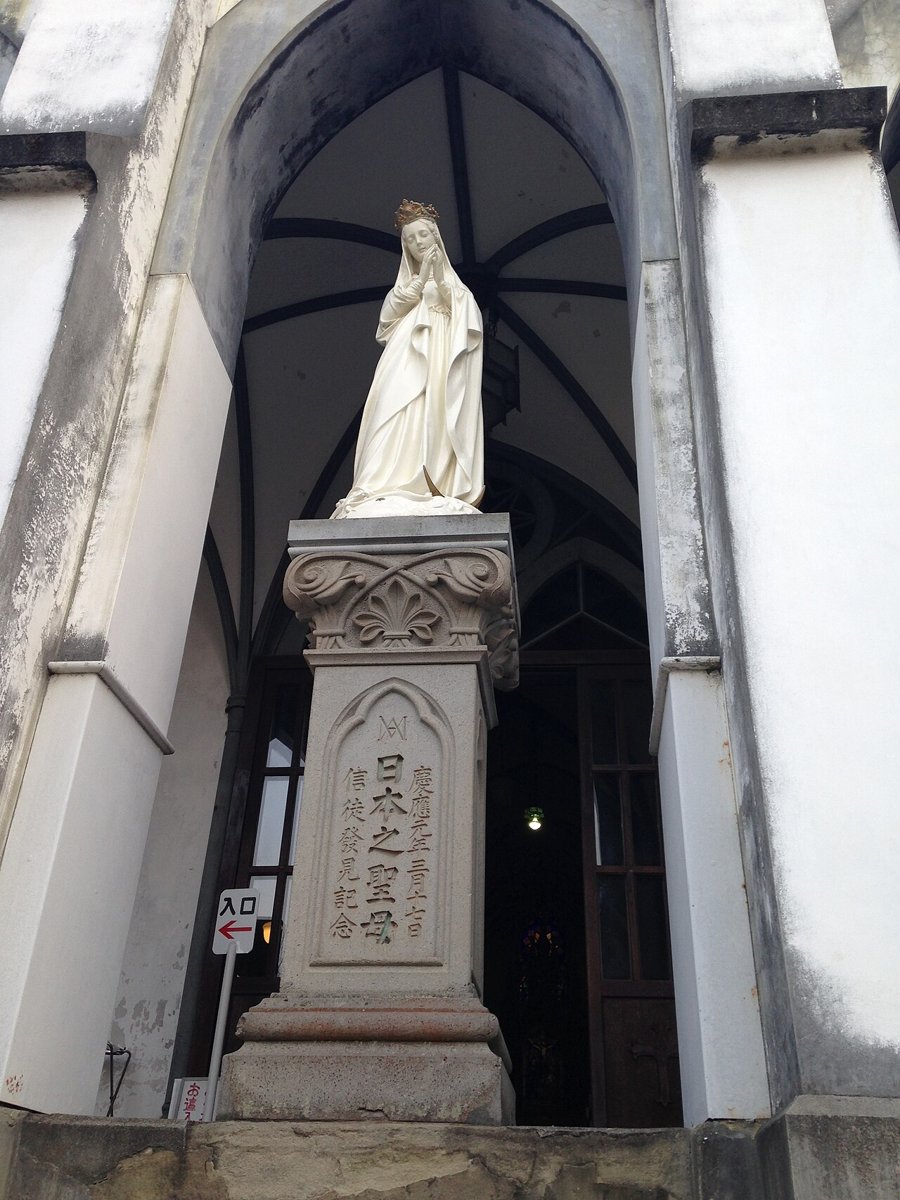
The statue is sometimes confused with a second, more famous outdoor figure: the white "Nihon no Seibo" (日本之聖母, Our Lady of Japan) in front of the church. That outdoor statue was bought with money given by believers and set up on 2 June 1867, with an inscription in Latin and Japanese. 2 The statue of the Discovery is the one inside. Notesources differ on which side altar holds it today. The Nagasaki City feature places it on the right as you face the altar; the Church Trust numbered route lists a Mary altar and a Sacred Heart altar with the opposite orientation. Disputed. 2,5
What you see in the photograph
Our gallery image is a crop from a 2012 photograph of the interior by Masoud Akbari (CC BY-SA 3.0). 8 It shows a crowned Virgin holding the Child on a side altar. The photo is soft because it is a crop from a wide interior view; we found no sharper, freely licensed close-up. Unverifiedthe statue's maker, date of manufacture and material are not given in any source we checked.
A statue that became a symbol
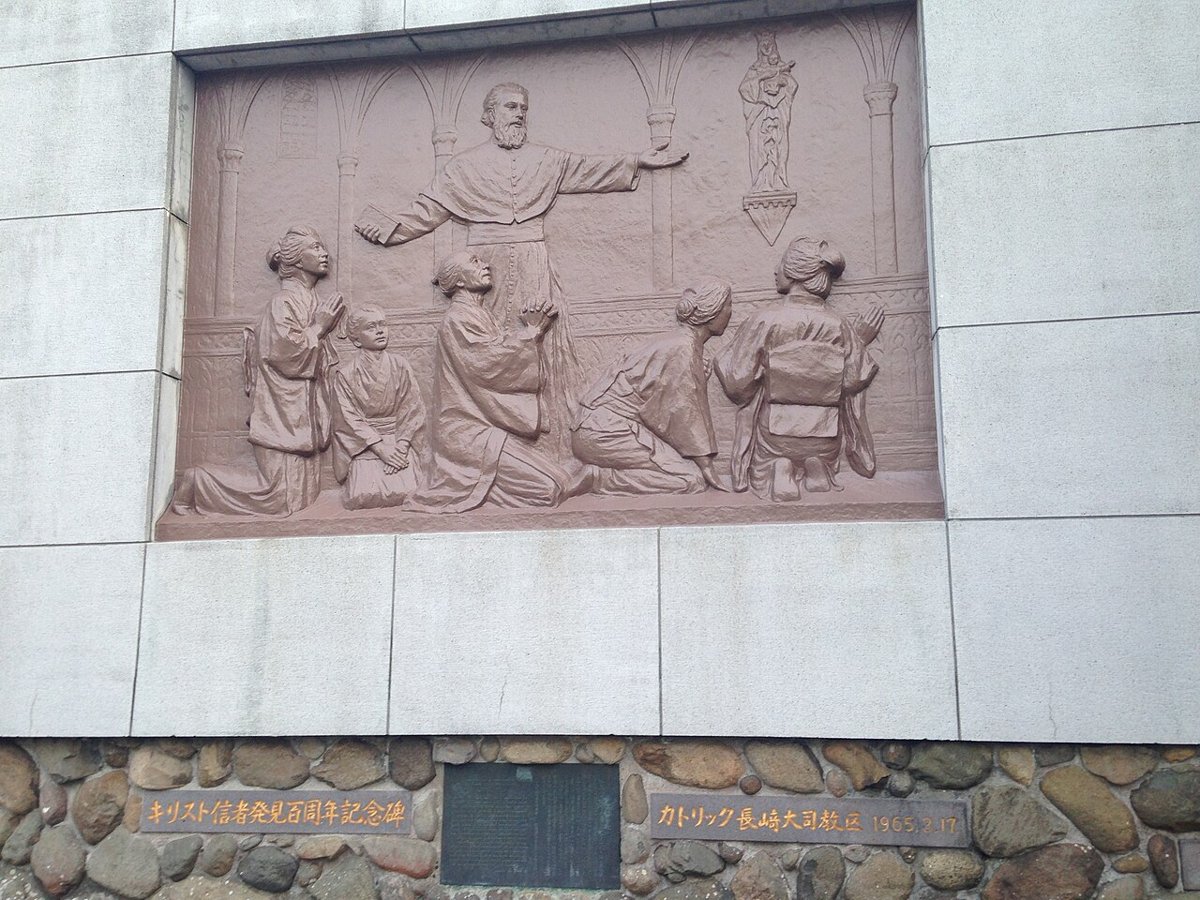
The Japan Tourism Agency's multilingual text on the "Age of Hiding" uses a picture of "the statue of the Virgin Mary (Ōura Cathedral)" to illustrate the Discovery itself. 4 At the church, a centennial relief of the Discovery was set up in 1965. 9 Petitjean, who became vicar apostolic in 1866, died in 1884 and was buried beneath the sanctuary. Traditionthe burial spot is said to be where he knelt when the villagers approached. 2