十Christian Japan
Place guide · Beyond Japan · Church

The Gesù, Rome: The Arm of St Francis Xavier

On the altar step of a chapel in the mother church of the Jesuits, a reliquary holds the right forearm of Francis Xavier, the saint who first brought the Gospel to Kagoshima in 1549. Above it, a painting shows him dying on the island of Sancian, in the far East.

3 min read7 sources2 pinsVisitingTap any name, place or term to learn moreTimeline

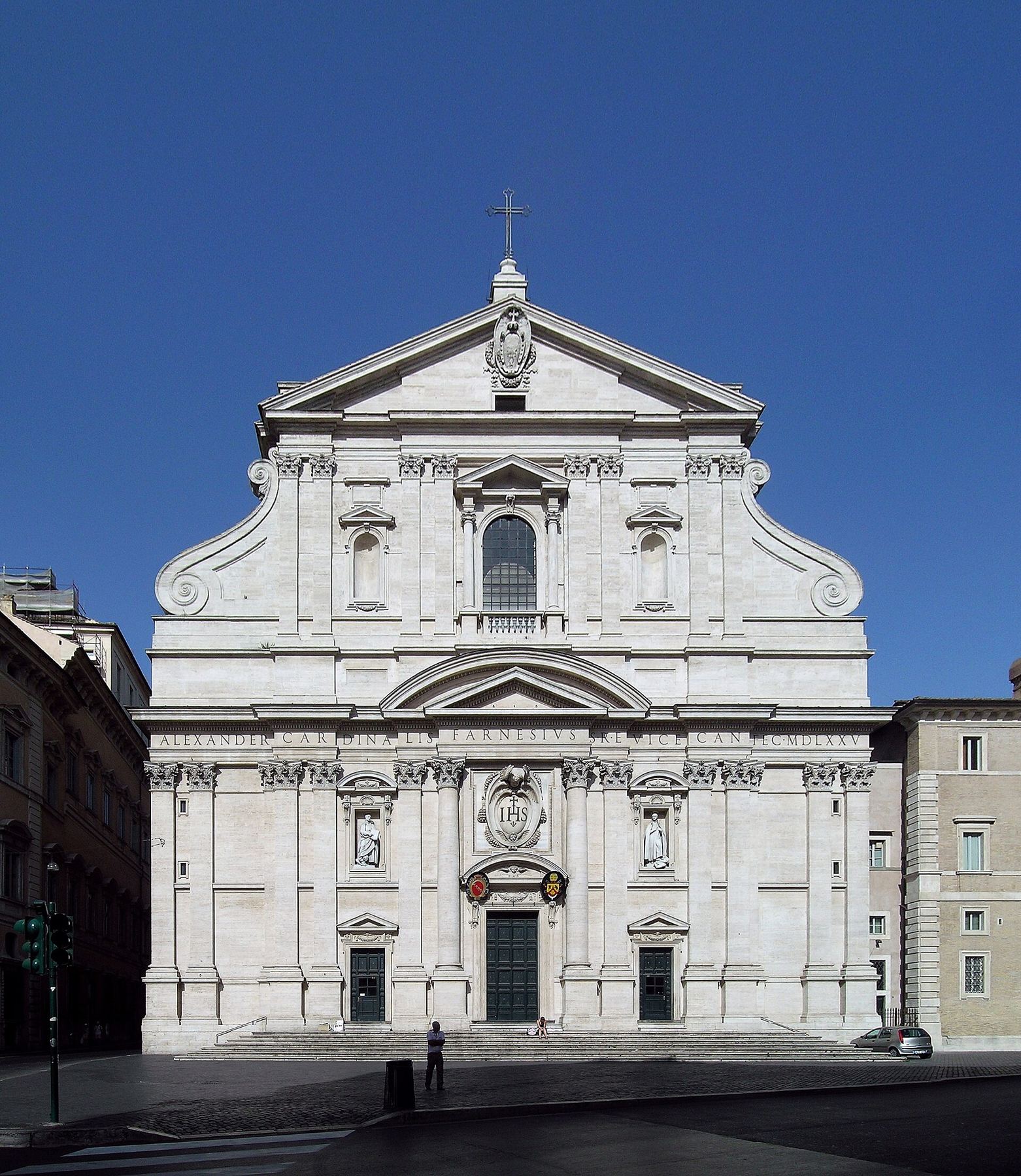
The Gesù is where the Japan mission's story meets Rome. Ignatius of Loyola laid its first foundations; his companion Xavier is honoured in its right transept and Ignatius himself rests in the left. For Japanese Catholics the arm in its reliquary is a link to the man who began it all.

A gilded angel spreads its wings over an oval silver reliquary set in black and white marble on the altar of St Francis Xavier
A gilded angel spreads its wings over an oval silver reliquary set in black and white marble on the altar of St Francis Xavier.Reliquary of the arm of St Francis Xavier, church of the Gesù, Rome, 2006. Jastrow, public domain. Commons

In 60 seconds

The place in 6 steps. Each line is footnoted.

  1. 1549Francis Xavier lands at Kagoshima.
  2. 6 Oct 1554A foundation ceremony for the new church, with St Ignatius present.
  3. 26 Jun 1568The definitive first stone is laid in the presence of Cardinal Alessandro Farnese.
  4. 25 Nov 1584Cardinal Santori, delegate of Gregory XIII, consecrates the church.
  5. 1614Jesuit General Claudio Acquaviva has Xavier's right forearm separated from his body.
  6. 23 Jul 1637The body of St Ignatius is placed in Algardi's bronze urn.

The chapel of St Francis Xavier

The chapel in the right transept was designed by for Monsignor, later Cardinal, Giovanni Francesco Negroni, who held its patronage. Four great columns of veined red marble with Corinthian capitals carry a broken pediment, and in the gap a large stucco relief shows Xavier carried to heaven by angels in a burst of gilded rays.

The altarpiece, by , shows Xavier dying on the island of , in the far East. On the arch above, Giovanni Andrea Carlone painted the saint in glory, the crucifix he lost at sea and that a crab brought back to him, and the baptism of an Indian princess.

On the altar step is the that holds the right forearm of the saint. It was separated from his body, which is venerated in Goa, by the Jesuit General in 1614.

Sources: the chapel of st francis xavier

The church's own site and its printed guide describe the chapel, the painters and the relic.

On the mapThe Gesù
Chiesa del Gesù. Full atlas and pin sources

The man in the reliquary

Xavier left Goa for Japan on 15 April 1549 with Anjirō and his Japanese companions and two Jesuits, Father Cosme de Torres and Brother Juan Fernández. He landed at Kagoshima on 15 August, the feast of the Assumption, was welcomed by Anjirō's family and friends, and on 29 September was received by Shimazu Takahisa, lord of Satsuma, who gladly let him preach. In Yamaguchi, with gifts first meant for the emperor, he won leave to preach from Ōuchi Yoshitaka, and his house filled with visitors asking about the earth, the sun, eclipses and comets. Hubert Cieslik SJ, writing of the whole Japan mission, says that every missionary after him worked in the light of the way Xavier had opened.

1550 to 1584

Building the Gesù

wished to build a larger church on the spot and dedicate it, like his order, to the Name of Jesus. Foundation stones were laid around the end of 1550 and again on 6 October 1554, both times with Ignatius present, but disputes with neighbouring families stopped the work. In July 1561 Cardinal Alessandro Farnese promised to pay for the church, and the definitive first stone was laid with great festivity on 26 June 1568. Vignola, the Farnese architect, designed a single wide nave with side chapels. On 25 November 1584 Cardinal Giulio Antonio Santori, delegate of Pope Gregory XIII, consecrated it. Four months later, on 23 March 1585, the four young envoys from Japan reached Rome and were received by the same pope.

On the mapFrom Kagoshima to Rome
Chiesa del Gesù, Xavier landing memorial. Full atlas and pin sources
Today

Ignatius and Xavier

Across the transept from Xavier is the chapel of St Ignatius; on 23 July 1637 his body was laid in a gilded bronze urn by Alessandro Algardi, given by a benefactress, Francesca Giattini.

Timeline

The dated story

Every dated event on this page, with its sources. Filter by section.

  1. 15 Apr 1549Xavier sails from Goa for Japan
  2. 15 Aug 1549Xavier lands at Kagoshima
  3. About 1550 to 1551First foundation stone, Ignatius present
  4. 6 Oct 1554Second foundation ceremony
  5. Jul 1561Cardinal Farnese promises to pay
  6. 26 Jun 1568Definitive first stone
  7. 25 Nov 1584Church consecrated
  8. 23 Mar 1585Tenshō envoys reach Rome
  9. 1614Xavier's forearm separated by Acquaviva
  10. 23 Jul 1637Body of Ignatius placed in Algardi's urn
Atlas

Where it happened

Each pin is a place named on this page. Coordinates come from official prefecture maps, OpenStreetMap or Wikidata, as listed. Rows marked "not yet pinned" have no verified pin.

This placeRelated site
PlaceWhy it matters hereCoordinatesCoordinate source
Chiesa del Gesù, RomeMother church of the Jesuits; Xavier's arm relic41.8958842, 12.4798212OpenStreetMap way/25610962
Xavier landing memorial, KagoshimaWhere Xavier's mission to Japan began31.6036964, 130.5718468OpenStreetMap node/3089188844
Name cards

People, places and events

Who and what this page touches. Dashed cards are pages still to come.

Visiting

If you go

Practical details change. Check with the operators before you travel. Churches are places of worship: please follow the visitor manners asked of you.

Read next

Where to go from here

Glossary

Words on this page

reliquary 聖遺物容器
A container for the relic of a saint.
Sources

Footnotes

Translations from Japanese sources are ours.

  1. Chiesa del Santissimo Nome di Gesù all'Argentina (official site), "Cappella di san Francesco Saverio," source link (checked 19 Oct 2026)
  2. Chiesa del Gesù, Roma, presentation guide (Italian and English), source link (checked 19 Oct 2026)
  3. Kadota Akira, "ザビエル、鹿児島に上陸する" (鹿児島とキリスト教 9), Catholic Diocese of Kagoshima, source link, as used in our place guide "Kagoshima"
  4. Nagasaki Museum of History and Culture, 『新発見!天正遣欧少年使節 伊東マンショの肖像』 exhibition page (2016), source link (checked 19 Oct 2026)
  5. Hubert Cieslik SJ, "St. Francis Xavier," Early Jesuit Missionaries in Japan 1 (1954), reprinted in Francis Britto, *All about Francis Xavier* (Sophia University).pdf
  6. Henry James Coleridge SJ, *The Life and Letters of St. Francis Xavier*, vol. 1, new edition (London: Burns and Oates, 1886), p. 394
  7. Daniello Bartoli and Giovanni Pietro Maffei, *The Life of St. Francis Xavier, Apostle of the Indies and Japan*, preface by F. W. Faber (New York: O'Shea), pp. 213 to 214, source link
Images

Image credits